Starmap
Free
5.0.1for iPhone
Age Rating
Starmap Screenshots
About Starmap
Starmap is the complete reference for everyone who observes the real night sky — built by a professional astronomer, and given freely.
No ads. No subscriptions. No in-app purchases. No tracking. Simply the most catalogue-complete star atlas ever published for iPhone.
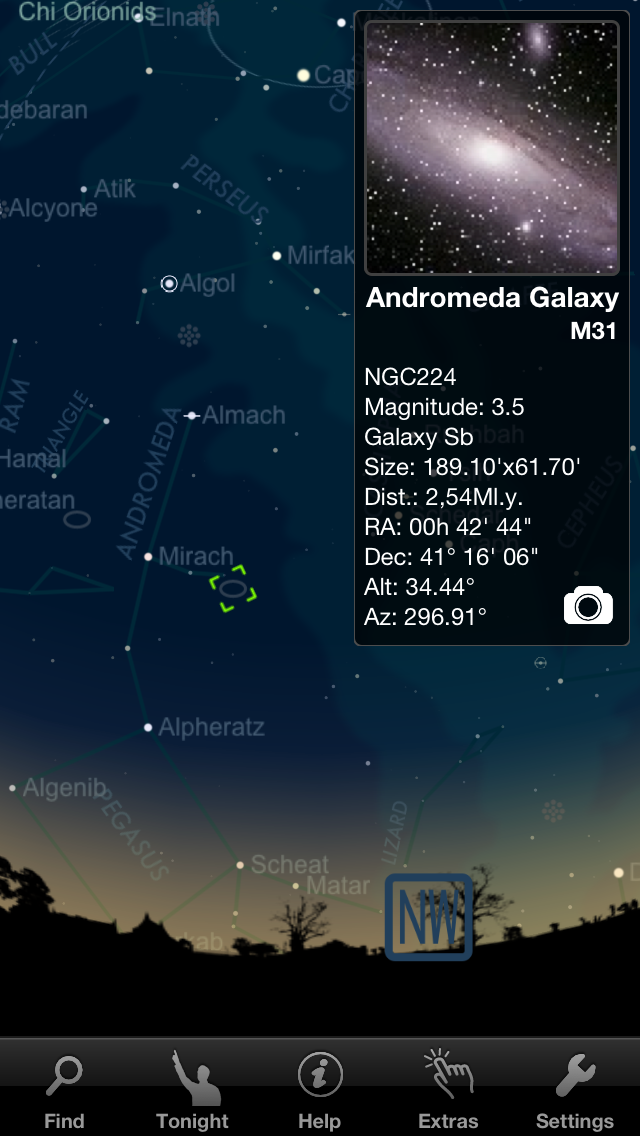
• Millions of stars, 88 constellations, and the full Messier, NGC, IC and Caldwell catalogues
• Specialist catalogues no other app carries: Sharpless, van den Bergh, Lynds, Barnard, Abell clusters
• Live solar physics from NOAA — sunspots, flares, X-ray flux, Kp index and aurora forecasts
• 9,900 named lunar features, with their origins and etymologies
• Live comets, asteroids and trans-Neptunian objects from the Minor Planet Center
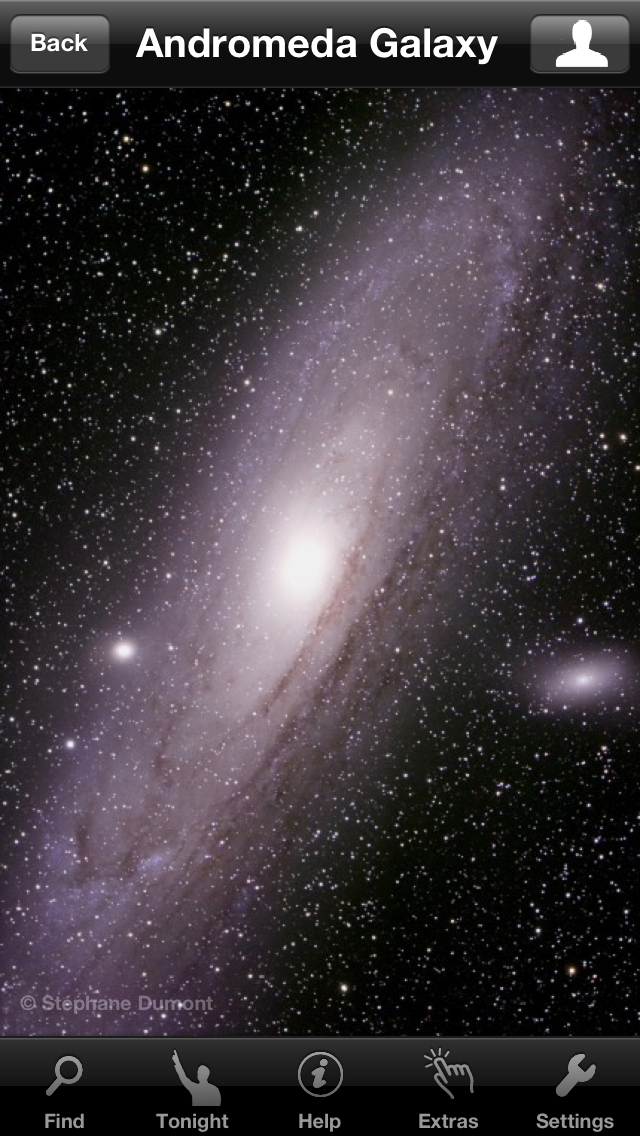
• Deep-sky detail enriched on demand from SIMBAD, searchable by any catalogue identifier
• A true optics workflow: define your telescope and eyepieces, see real field of view, Telrad rings and reticles
• A dark-adapted red night-vision mode, made for use at the eyepiece
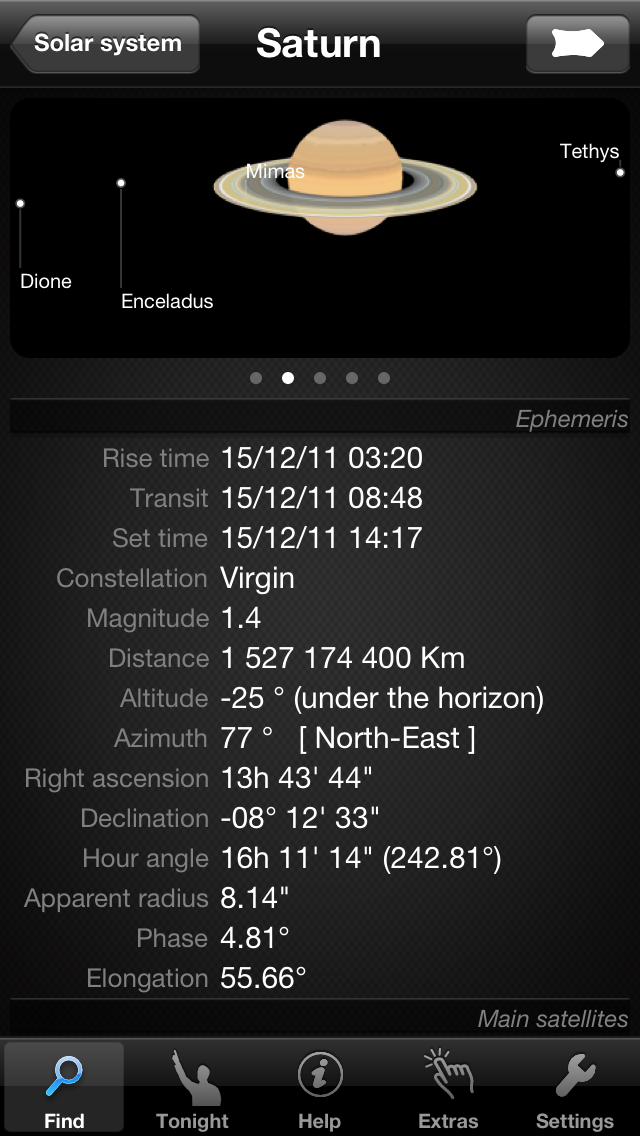
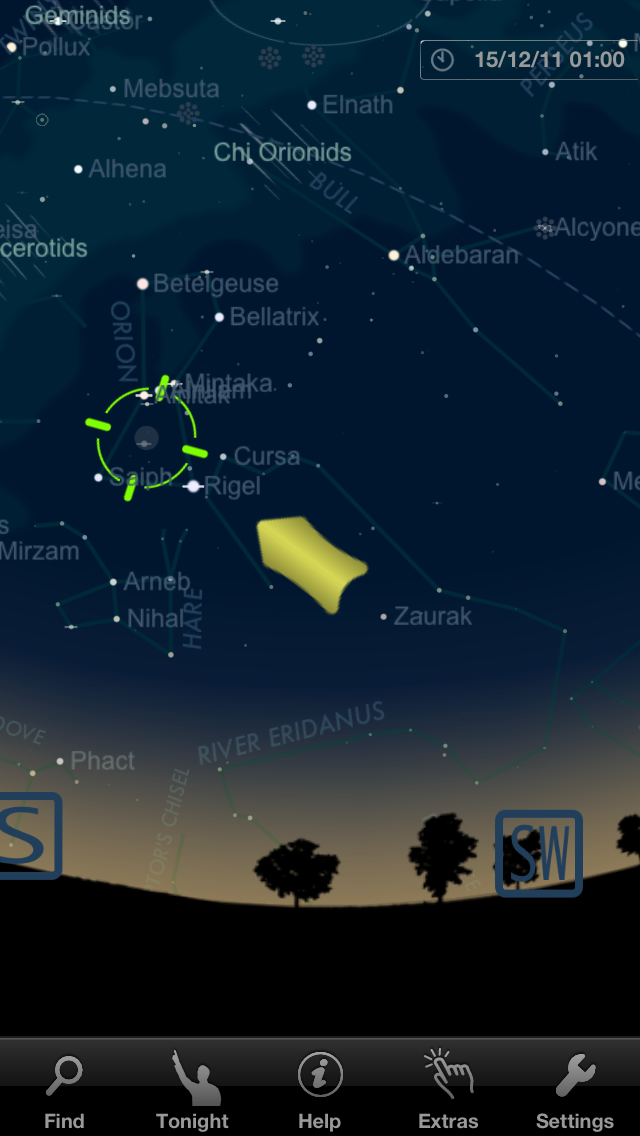
Point your phone at the sky to identify anything above you, or plan the night before you step outside. Rise, transit and set times for every object, sent straight to your calendar.
A reference work, not a toy. Free, because that is what it should be.
No ads. No subscriptions. No in-app purchases. No tracking. Simply the most catalogue-complete star atlas ever published for iPhone.
• Millions of stars, 88 constellations, and the full Messier, NGC, IC and Caldwell catalogues
• Specialist catalogues no other app carries: Sharpless, van den Bergh, Lynds, Barnard, Abell clusters
• Live solar physics from NOAA — sunspots, flares, X-ray flux, Kp index and aurora forecasts
• 9,900 named lunar features, with their origins and etymologies
• Live comets, asteroids and trans-Neptunian objects from the Minor Planet Center
• Deep-sky detail enriched on demand from SIMBAD, searchable by any catalogue identifier
• A true optics workflow: define your telescope and eyepieces, see real field of view, Telrad rings and reticles
• A dark-adapted red night-vision mode, made for use at the eyepiece
Point your phone at the sky to identify anything above you, or plan the night before you step outside. Rise, transit and set times for every object, sent straight to your calendar.
A reference work, not a toy. Free, because that is what it should be.
Show More
What's New in the Latest Version 5.0.1
Last updated on Jun 10, 2026
Old Versions
New:
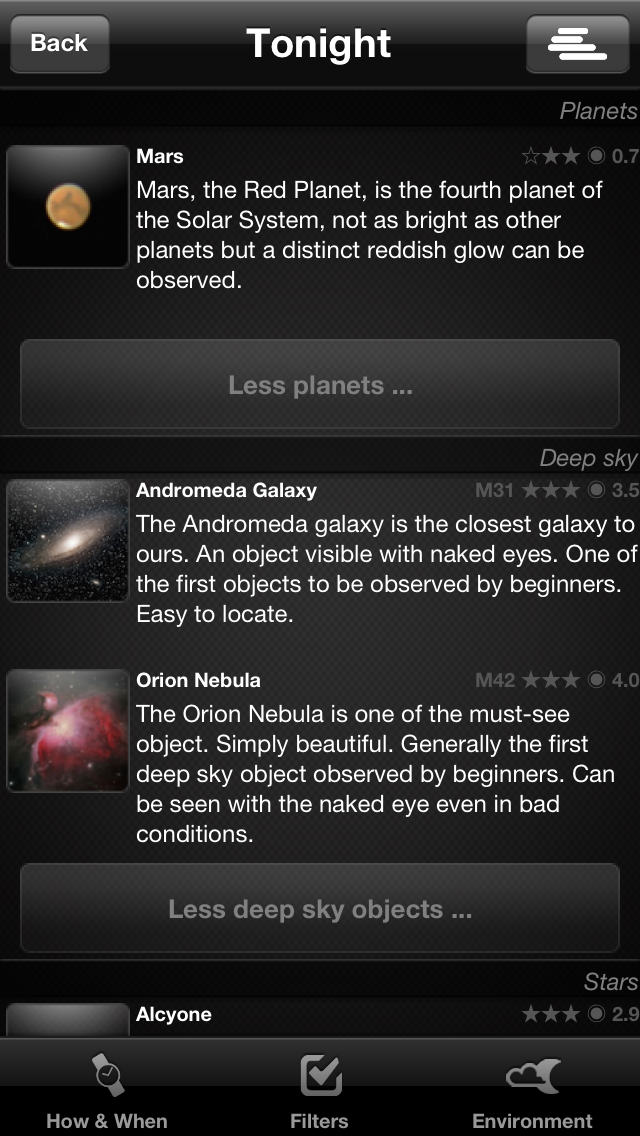
- New "Tonight" section: shows which objects are best observed tonight.
Fixed:
- The map could sometimes freeze when returning to the app.
- Corrected the Moon phase display.
This release brings:
• A complete visual-observer atlas — millions of stars, 88 constellations, and the full Messier, NGC, IC and Caldwell catalogues, rendered by magnitude with constellation artwork, the Milky Way, coordinate grids and an accurate horizon.
• Specialist deep-sky catalogues no other consumer app ships — Sharpless, van den Bergh, Lynds Bright and Dark Nebulae, Barnard dark objects, southern dark clouds and Abell galaxy clusters.
• Live solar physics from NOAA — sunspot and plage regions, daily sunspot number, F10.7 flux, GOES X-ray class, flare activity, three-day Kp forecasts and aurora maps for both hemispheres.
• 9,900 lunar surface features across 16 IAU types, with name origins, etymologies and parent–child relationships.
• Live solar-system objects from the Minor Planet Center — comets, asteroids, trans-Neptunian and interstellar objects, browsable by orbital family and searchable by name.
• SIMBAD integration — open the detail of thousands of deep-sky objects and stars, and search by any cross-identifier (2MASS, GJ, 1RXS and more).
• A real optics workflow — define telescopes, eyepieces, cameras, finders and binoculars; see true eyepiece field of view, Telrad rings, reticles and image flip for star-hopping at the eyepiece.
• Three themes including a dark-adapted red mode for night vision, light-pollution and twilight simulation, selectable grids and reference lines, and adjustable sky quality.
• Calendar integration — add rise, transit, set and twilight times for any object straight to your calendar.
No ads. No subscriptions. No in-app purchases. No tracking. Free, because that is what it should be.
Clear skies.

- New "Tonight" section: shows which objects are best observed tonight.
Fixed:
- The map could sometimes freeze when returning to the app.
- Corrected the Moon phase display.
This release brings:
• A complete visual-observer atlas — millions of stars, 88 constellations, and the full Messier, NGC, IC and Caldwell catalogues, rendered by magnitude with constellation artwork, the Milky Way, coordinate grids and an accurate horizon.
• Specialist deep-sky catalogues no other consumer app ships — Sharpless, van den Bergh, Lynds Bright and Dark Nebulae, Barnard dark objects, southern dark clouds and Abell galaxy clusters.
• Live solar physics from NOAA — sunspot and plage regions, daily sunspot number, F10.7 flux, GOES X-ray class, flare activity, three-day Kp forecasts and aurora maps for both hemispheres.
• 9,900 lunar surface features across 16 IAU types, with name origins, etymologies and parent–child relationships.
• Live solar-system objects from the Minor Planet Center — comets, asteroids, trans-Neptunian and interstellar objects, browsable by orbital family and searchable by name.
• SIMBAD integration — open the detail of thousands of deep-sky objects and stars, and search by any cross-identifier (2MASS, GJ, 1RXS and more).
• A real optics workflow — define telescopes, eyepieces, cameras, finders and binoculars; see true eyepiece field of view, Telrad rings, reticles and image flip for star-hopping at the eyepiece.
• Three themes including a dark-adapted red mode for night vision, light-pollution and twilight simulation, selectable grids and reference lines, and adjustable sky quality.
• Calendar integration — add rise, transit, set and twilight times for any object straight to your calendar.
No ads. No subscriptions. No in-app purchases. No tracking. Free, because that is what it should be.
Clear skies.
Show More
Version History
5.0.1
Jun 10, 2026
New:
- New "Tonight" section: shows which objects are best observed tonight.
Fixed:
- The map could sometimes freeze when returning to the app.
- Corrected the Moon phase display.
This release brings:
• A complete visual-observer atlas — millions of stars, 88 constellations, and the full Messier, NGC, IC and Caldwell catalogues, rendered by magnitude with constellation artwork, the Milky Way, coordinate grids and an accurate horizon.
• Specialist deep-sky catalogues no other consumer app ships — Sharpless, van den Bergh, Lynds Bright and Dark Nebulae, Barnard dark objects, southern dark clouds and Abell galaxy clusters.
• Live solar physics from NOAA — sunspot and plage regions, daily sunspot number, F10.7 flux, GOES X-ray class, flare activity, three-day Kp forecasts and aurora maps for both hemispheres.
• 9,900 lunar surface features across 16 IAU types, with name origins, etymologies and parent–child relationships.
• Live solar-system objects from the Minor Planet Center — comets, asteroids, trans-Neptunian and interstellar objects, browsable by orbital family and searchable by name.
• SIMBAD integration — open the detail of thousands of deep-sky objects and stars, and search by any cross-identifier (2MASS, GJ, 1RXS and more).
• A real optics workflow — define telescopes, eyepieces, cameras, finders and binoculars; see true eyepiece field of view, Telrad rings, reticles and image flip for star-hopping at the eyepiece.
• Three themes including a dark-adapted red mode for night vision, light-pollution and twilight simulation, selectable grids and reference lines, and adjustable sky quality.
• Calendar integration — add rise, transit, set and twilight times for any object straight to your calendar.
No ads. No subscriptions. No in-app purchases. No tracking. Free, because that is what it should be.
Clear skies.
- New "Tonight" section: shows which objects are best observed tonight.
Fixed:
- The map could sometimes freeze when returning to the app.
- Corrected the Moon phase display.
This release brings:
• A complete visual-observer atlas — millions of stars, 88 constellations, and the full Messier, NGC, IC and Caldwell catalogues, rendered by magnitude with constellation artwork, the Milky Way, coordinate grids and an accurate horizon.
• Specialist deep-sky catalogues no other consumer app ships — Sharpless, van den Bergh, Lynds Bright and Dark Nebulae, Barnard dark objects, southern dark clouds and Abell galaxy clusters.
• Live solar physics from NOAA — sunspot and plage regions, daily sunspot number, F10.7 flux, GOES X-ray class, flare activity, three-day Kp forecasts and aurora maps for both hemispheres.
• 9,900 lunar surface features across 16 IAU types, with name origins, etymologies and parent–child relationships.
• Live solar-system objects from the Minor Planet Center — comets, asteroids, trans-Neptunian and interstellar objects, browsable by orbital family and searchable by name.
• SIMBAD integration — open the detail of thousands of deep-sky objects and stars, and search by any cross-identifier (2MASS, GJ, 1RXS and more).
• A real optics workflow — define telescopes, eyepieces, cameras, finders and binoculars; see true eyepiece field of view, Telrad rings, reticles and image flip for star-hopping at the eyepiece.
• Three themes including a dark-adapted red mode for night vision, light-pollution and twilight simulation, selectable grids and reference lines, and adjustable sky quality.
• Calendar integration — add rise, transit, set and twilight times for any object straight to your calendar.
No ads. No subscriptions. No in-app purchases. No tracking. Free, because that is what it should be.
Clear skies.
Starmap FAQ
Click here to learn how to download Starmap in restricted country or region.
Check the following list to see the minimum requirements of Starmap.
iPhone